For Brisbane gardens
We wrote this for Brisbane and South East Queensland weather and soils. If you'd like a hand, see our lawn mowing and lawn care page.
Founder and lead horticulturalist
About the author
Stan O'Donnell is the founder and lead horticulturalist at The Garden Barber. He started the business in 2017 and has formal horticultural training.
Read Stan O'Donnell's backgroundThe short answer
Most Brisbane lawns need mowing more often in summer because warm weather, rain and humidity push growth along quickly. Fortnightly mowing suits many maintained lawns, while fast growth after rain may need closer attention and dry or stressed lawns may need longer between cuts.
The right answer changes through summer. It depends on how quickly the grass is growing, how much leaf is being removed, whether the soil is holding moisture and whether the lawn is under stress. If a lawn looks scalped, patchy or full of weeds after each cut, mowing frequency is only part of the problem.
What changes mowing frequency in Brisbane summer?
Summer lawn mowing in Brisbane changes with rain, heat, shade and soil. A lawn can sit still during a hot dry spell, then grow hard after rain. A shaded patch under trees can behave differently from the front verge, and compacted soil can make one section dry out faster than the rest.
For a garden service, the useful question is "what mowing frequency keeps the lawn tidy without stressing it?" Regular lawn mowing should keep the grass presentable, protect the edges and give someone a chance to spot dry patches, weeds or irrigation problems early.
What to watch between mowing visits
- The lawn looks shaggy within a few days of the last cut.
- The edges disappear before the next visit.
- Clippings are heavy enough to sit on top of the lawn.
- Weeds show up faster than the grass recovers.
- Dry patches keep returning even when the rest of the lawn looks healthy.
- Mower tracks, scalped patches or brown tips appear after mowing.
Those signs tell you whether the schedule is too slow, too aggressive or missing another issue.
How high should a Brisbane lawn be mowed in summer?
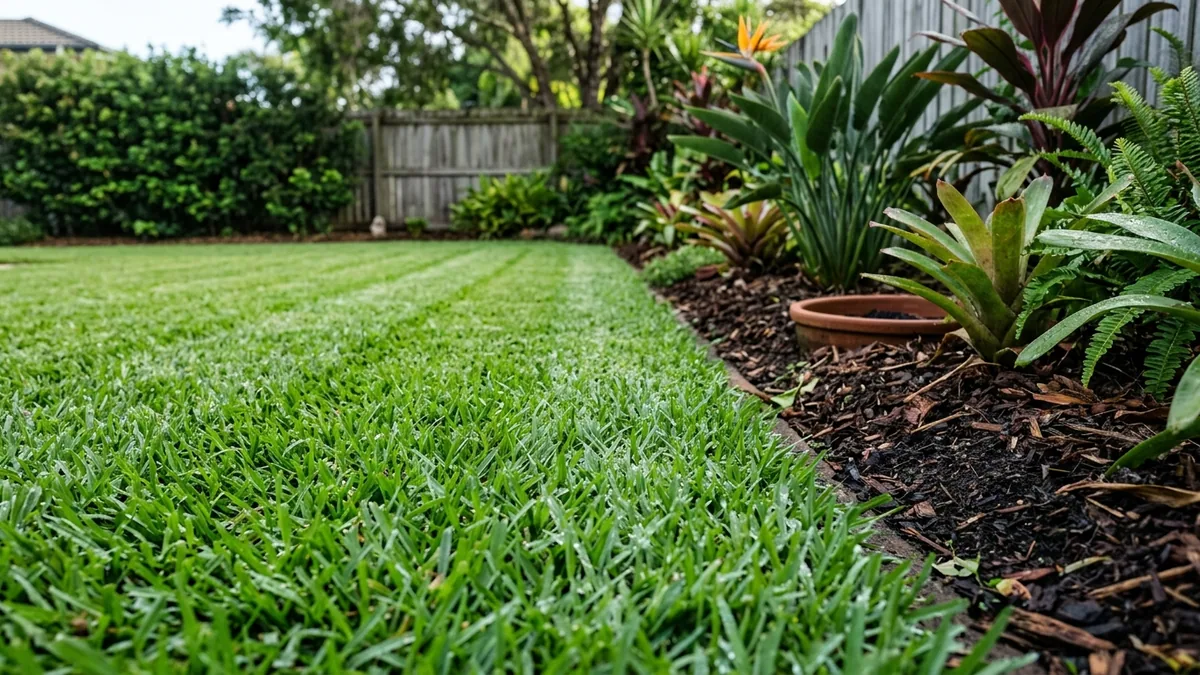
In summer, it is usually better to mow regularly and avoid cutting the lawn too short. Brisbane City Council's sustainable gardening advice says regular mowing discourages weeds and encourages healthier grass, and that cutting a lawn too short increases evaporation and promotes weed growth.
A practical rule is to remove less leaf more often, rather than taking a hard cut after the lawn has grown out. Grass needs leaf to shade the soil and keep feeding itself. When too much is cut off at once, the lawn looks tidy for a day but can be weaker by the next hot spell.
Why the "one third" idea matters
The one third idea is simple: avoid cutting off more than about the top third of the grass blade in one mow. It keeps the lawn looking controlled without shocking it.
That matters after rain. If the lawn has shot up, a heavy cut can leave pale stems, clumps of clippings and a stressed surface. Two lighter cuts spaced apart are often kinder than one very short cut.
Should summer lawns be mowed weekly, fortnightly or monthly?
Weekly mowing can suit a lawn that is growing very fast, has to look sharp from the street, or sits around an entry where presentation matters. It is usually more relevant after warm rain or during peak growth.
Fortnightly mowing suits many Brisbane residential lawns through active summer growth, especially when the lawn is already under control and the goal is to keep it tidy. This can also suit edges, paths and front lawns that need to stay presentable.
Monthly mowing can suit slower periods, shaded lawns, dry spells or lower priority lawn areas, but it is often too slow for a Brisbane lawn during a wet warm run. If monthly mowing means every visit becomes a catch up, the lawn may be better on a shorter summer schedule.
When should you slow down the mowing?
Slow the mowing down when the lawn is dry, thin, heat stressed or slow to recover after each cut. A lawn that is brown at the tips, dusty underfoot or patchy after every mow may need more leaf left on it, not more frequent cutting.
Queensland Government watering advice says the best way to tell if a garden needs watering is to check soil moisture. That applies to lawns too. A green surface does not always mean the root zone is right, and a brown patch does not always mean the whole lawn needs more water.
Check water before blaming mowing
Before changing the mowing schedule, check whether the lawn is getting even water. Dry patches can come from shallow watering, blocked irrigation, overspray, compacted soil, old mulch on nearby beds or a section that gets more sun and wind.
If the lawn is dry in one area and healthy elsewhere, mowing more often will not fix it. Start with an irrigation check or ask for lawn care advice when booking the mow.
How do weeds change the mowing plan?
Weeds often show up when the lawn is stressed, cut too short or left too long between visits. Mowing can make a lawn look neater, but it does not solve a weed problem in the beds, paths or lawn edges by itself.
Brisbane City Council lists mulch, competitive planting, hand removal and targeted control among weed management methods. For a home garden, the practical version is to keep lawn edges clean, stop weeds seeding through paths and beds, and use mulch where it suits the garden bed.
If the weeds are mostly in garden beds or paving gaps, book weed control with the mowing. If the lawn itself is full of weeds, the mowing height, water and soil condition all need a look.
When does a patchy lawn need more than mowing?
A patchy Brisbane lawn may need more than a mower if the same bare or weak areas keep coming back. Common reasons include compacted soil, uneven watering, too much shade, wear from foot traffic, pests, poor drainage or mowing too short in hot weather.
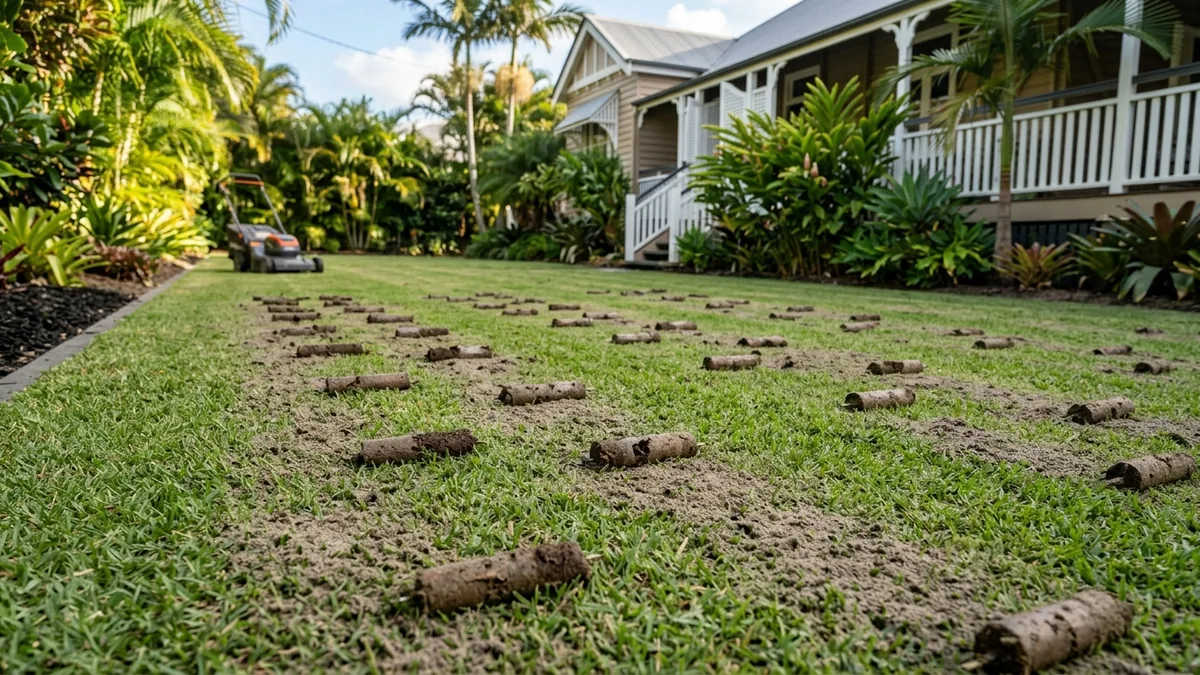
The Garden Barber's lawn care work includes mowing, edging and advice on tired lawns, and Stan has confirmed that lawn care can also include aeration, coring and seeding. Those jobs are useful when the issue is soil, surface recovery or thin grass.
Signs to ask for a lawn assessment
- Water runs off or sits on top instead of soaking in.
- The same patches thin out after every hot spell.
- The mower leaves marks because the surface is uneven.
- The soil feels hard underfoot.
- The lawn looks tidy straight after mowing but tired within days.
- You need mowing, irrigation and soil advice together.
Which Brisbane suburbs does this apply to?
This guide is written for the Brisbane CBD and the inner suburbs The Garden Barber covers, including Indooroopilly, Toowong, Taringa, St Lucia, Chelmer, Graceville, Sherwood, Corinda, Brookfield, Kenmore, Fig Tree Pocket, Paddington, New Farm, Teneriffe, Ascot, Hawthorne, Balmoral, Milton, West End and nearby listed suburbs.
The mowing schedule is different in every yard. Brookfield, Kenmore and Fig Tree Pocket blocks may have larger lawn areas and irrigation questions. Indooroopilly, Toowong, Taringa and St Lucia gardens often mix lawn, slope, shade and established beds. Paddington or New Farm homes may have smaller lawns where clean edges and paths make a big difference.
What should you send for a summer mowing quote?
Send your suburb, a few lawn photos and any access notes. If the lawn has dry patches, weeds or uneven growth, include close photos as well as a wider shot of the whole lawn. Say how often it is mowed now, whether there is irrigation, and whether you want a one off mow or regular visits through summer.
Photos help separate a simple mowing job from a lawn care problem. They also show the edges, paths, gates, slopes, green waste and nearby beds that affect how long the visit will take.
Where to start
- Lawn is healthy but growing fast: book regular mowing and edging.
- Edges and paths are the main issue: include edging and blow down in the visit.
- Dry patches keep coming back: add an irrigation check.
- Soil feels hard or water runs off: ask about aeration, coring or lawn care advice.
- Weeds are in beds and paths: add weed control.
- The whole garden is behind: start with garden maintenance or a clean up, not mowing alone.
Quotes are free. Use the quote form or call 1300 001 803, and send photos so we can suggest the right summer mowing schedule.
Sources used in this guide
Quick answers
How often should you mow a Brisbane lawn in summer?
Most actively growing Brisbane lawns need mowing more often in summer than in winter. Fortnightly mowing suits many maintained lawns, while fast growth after rain may need closer attention and dry or stressed lawns may need longer between cuts.
Should you cut a Brisbane lawn shorter in summer?
No. Cutting a lawn too short in summer can stress the grass, increase evaporation and make weeds more likely. It is usually better to mow regularly and remove less leaf each time.
When does a patchy lawn need more than mowing?
If patches keep coming back after mowing and watering, the problem may be irrigation coverage, compacted soil, shade, pests or worn areas. The lawn may need an irrigation check, aeration, coring, seeding or a seasonal lawn care plan.
Free quotes
Getting a quote
Quotes are free. Send your suburb and a few photos through the quote form.
Other pages that might help
Lawn mowing in Brisbane
What The Garden Barber includes in lawn mowing, edging and lawn care visits.
Summer lawn care tips for South East Queensland
A broader guide to watering, mowing height, summer stress and lawn recovery.
When should you aerate and top dress a Brisbane lawn?
Read this if dry patches, compaction or uneven lawn recovery keep coming back.
Get us to do it
Regular mowing and edging, with the paths and driveway blown clean.