
For Brisbane gardens
We wrote this for Brisbane and South East Queensland weather and soils. If you'd like a hand, see our seasonal garden maintenance page.
Founder and lead horticulturalist
About the author
Stan O'Donnell is the founder and lead horticulturalist at The Garden Barber. He started the business in 2017 and has formal horticultural training.
Read Stan O'Donnell's backgroundHow a Brisbane garden changes in autumn
Autumn in Brisbane is gentler than in colder cities, but the garden still changes. The days get shorter, it cools a little, the humidity eases and the rain changes. Growth slows down but keeps going.
It's a useful time of year. You can still see the damage from summer, so you know what needs attention. The cooler weather makes the work more pleasant. And sorting the garden now means less catching up when the dry winter arrives and spring growth takes off.
Two mistakes are common: carrying on as if it's still summer, or leaving everything until spring. Either one leaves the garden behind.
Mowing through autumn
Keep mowing, but change how you do it. Most lawns here are warm season grasses like buffalo, couch or zoysia. As growth slows they need fewer mows, but they still need regular care.
Raise the mowing height a little. Longer grass stores energy and protects the crown as it gets cooler. Scalping a slowing lawn weakens it before winter and gives weeds room to move in.
How often to mow in autumn
That depends on the grass and the weather. Mow when the grass has grown enough to need a cut, and drop the strict summer schedule. For many lawns that means every fortnight in place of every week. Leave it six weeks, though, and you'll create more problems than you solve.
Fertilising the lawn in autumn
Autumn feeding can help if it's done early with a suitable product. A balanced slow release fertiliser supports the roots and helps the lawn store nutrients for winter. Heavy nitrogen late in autumn pushes soft growth that struggles in the cold.
If the lawn is still stressed from summer, fix the cause first. Fertiliser on a struggling lawn wastes money and gives you more mowing without much improvement.
Autumn pruning jobs
Autumn suits shaping plants and cutting out dead or damaged growth before winter. Many plants in Brisbane are still growing enough to recover from a sensible prune, and the milder weather means less shock.
Hedges need a tidy after all that summer growth. Fruit trees and many ornamental plants do well with some thinning so air can move through them. Deal with branches damaged in summer storms now, before they break or tear further.
Hard pruning in autumn
Only for certain plants, and only if you know how that plant responds. Cut the wrong plant hard at the wrong time and you can lose next season's flowers, or the plant may never fully recover.
For most homeowners, a gentle autumn prune is safer. Take out dead wood, thin dense sections and reshape. Save the heavy cuts until you're sure how the plant will recover.
Mulching garden beds in autumn
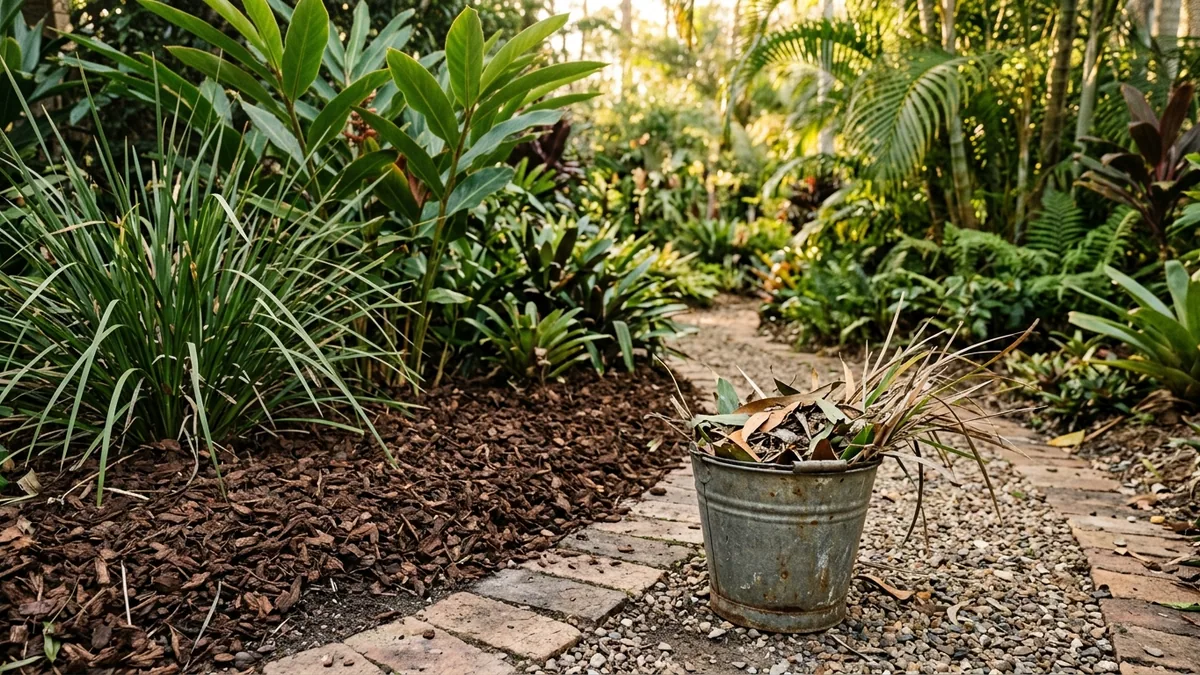
It's one of the best times to do it. Fresh mulch keeps the soil warmer as the nights cool, holds moisture through the drier winter months and smothers weeds that are still coming up.
Plenty of beds took a beating from summer heat and storms. Top up any mulch that has broken down or washed away. A good layer keeps the soil temperature even, slows evaporation and makes the bed look neat going into winter.
How thick to lay mulch
About 5 to 10 centimetres is enough. Too thin and it does little. Too thick and it can shed water or smother plants with shallow roots.
Keep mulch away from trunks and stems too. A mound of mulch piled around the base of a tree or shrub holds moisture against the bark and causes problems.
Weeds after a long summer
Weeds peak after summer in Brisbane. Warm, wet weather lets them take hold, and by autumn many gardens have a fresh crop of bindii, oxalis, cobblers pegs and grassy weeds.
Deal with them now, while the garden is slowing down. Hand weeding works for small areas. For bigger gardens or weeds that keep coming back, weeding and weed control with targeted removal makes sense.
Get them out before they set seed. One season of neglect can mean several seasons of weeding, especially with creeping oxalis, which spreads fast in Brisbane conditions.
Spraying weeds in autumn
It depends on the weed, the plants around it and the product. A spray that kills everything it touches can damage the other plants in a mixed bed. Targeted removal, by hand or with a careful spot spray, is safer.
For households that want fewer chemicals, improve the soil and plant more closely this autumn. Over time that helps crowd the weeds out.
Adjusting irrigation in autumn
As it cools and less water evaporates, most gardens need less water than they did in summer. It's easy to miss this and keep running the schedule you set in January.
Check the system, space out the waterings and make sure the coverage is still good. While you're at it, fix the problems summer showed up: blocked emitters, overspray onto paths, broken risers or dry patches the sprinklers never reached.
How much to cut back watering
There's no set percentage. It comes down to the soil, the plants, the mulch and the rain. Leave a longer gap between waterings and watch how the garden responds. If the plants stay healthy and the soil holds moisture, you've found a good level.
Brisbane winters are dry, so don't cut back too hard. Plants can get stressed just as the dry westerly winds start.
Planting in autumn
Autumn is one of the better planting times in South East Queensland. The soil is still warm enough for roots to grow, and new plants aren't battling the heat every afternoon.
Natives, hardy shrubs and many ground covers settle in well when planted now. The roots they grow through autumn and winter give them a strong start when spring arrives.
What not to plant in autumn
Tender tropical plants that need steady warmth are riskier. Sowing a new lawn from seed late in autumn often fails too, because the seed is slow to come up and weeds keep competing with it.
If you're not sure what suits your garden, get advice before you plant, so you're not replacing plants next season.
The biggest autumn mistakes
The first is doing nothing and hoping the garden coasts through to spring. It still needs care, a close eye and small adjustments.
The second is overdoing it: heavy pruning, lots of fertiliser or big irrigation changes the garden doesn't need. Either extreme causes problems that show up in spring.
Getting help with autumn work
It's worth getting help when the garden has drifted after summer, when pruning or irrigation jobs need a closer look, or when you want the place kept tidy without giving up every weekend.
Before winter, get the whole garden looked over too. Someone with horticultural training can spot things that are easy to miss, like tired soil, pests building up quietly, drainage that will get worse in winter, or plants that aren't working together.
What we suggest for autumn
For most homes, we suggest a short round of autumn jobs. Mow and raise the cutting height. Get the weeds out before they seed, and prune for shape and health. Then top up the mulch, check the irrigation and look over any storm damage from summer.
That sounds like a lot, but it's a few focused visits and not a full overhaul. The aim is a settled garden through winter and a head start in spring.
If the garden has been sliding since summer, have a look at our garden maintenance service or ask for a free quote through the form. We'll tell you what needs doing this autumn.
Sources used in this guide
Quick answers
Should you fertilise your lawn in autumn?
A balanced slow release fertiliser in early autumn can help the roots before winter. Avoid heavy nitrogen late in autumn. It pushes soft growth that struggles once the weather cools.
Is autumn a good time to mulch in Brisbane?
Yes, it's one of the best times. Mulch keeps the soil warmer on cool nights, holds moisture through the dry winter months and keeps weeds down before they set seed.
Can you plant new plants in autumn around Brisbane?
Yes. Autumn is one of the best planting times in South East Queensland. The soil is still warm enough for roots to grow, and the milder days give new plants time to settle in before spring.
Free quotes
Getting a quote
Quotes are free. Send your suburb and a few photos through the quote form.
Other pages that might help
Get us to do it
We get the garden ready for each season, with the jobs planned around the time of year.